
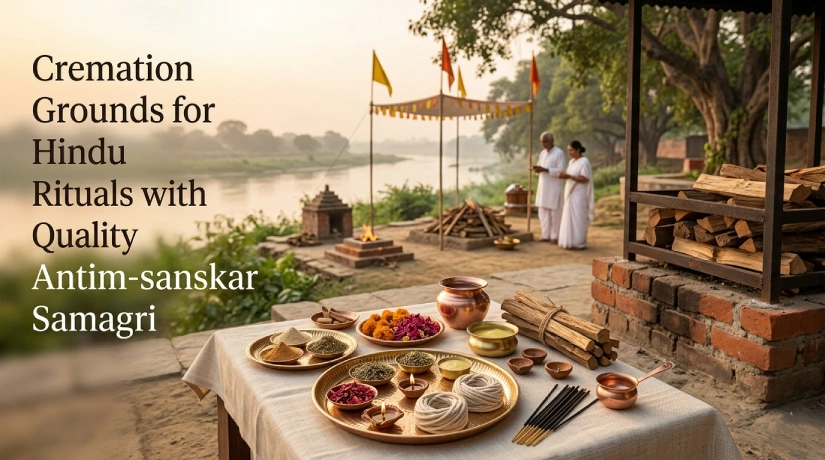
Cremation Grounds for Hindu Rituals with Quailty Antim-sanskar Samagri
The journey between life and death is never easy. Saying goodbye to a loved one is not only a matter of sorrow but also a matter of responsibility. The responsibility is to give a peaceful and dignified send-off. In these situations, the availability of the right venue and the required supplies is of utmost importance, especially when you are looking for dependable cremation grounds in Noida, where the rituals can be performed in strict accordance with religious norms.
The Hindu funeral rite, Antim Sanskar, is a ritual and a holy procedure that leads the soul to peace and onward to its journey. Throughout this procedure, every single item is of utmost importance. It could be the wood for the funeral pyre, holy water from the Ganges River (Gangajal), or Tulsi leaves. Thus, a cremation ground that provides you with all the required supplies is a pillar of strength during these difficult hours. Antim Niwas is a place that makes the difficult hours a bit easier.
List of Samagri You Will Get at Antim Niwas Cremation Ground
Here, we have listed some vital samagri that you will get at Antim Niwas cremation ground for performing antim sanskar:
1. Wood (Lakdi)
One of the main types of samagri used in the funeral pyre in cremation grounds in Noida includes wood. Traditionally, wood obtained from a Pipal tree (Ficus religiosa) or a Mango tree (Mangifera indica) is used. In addition, sandalwood or Chandana is used in funeral rites for its sacredness, purity, and fragrance. It symbolizes a dignified farewell. In addition, wood is arranged in a particular manner to facilitate complete combustion. This symbolizes a sacrifice to Agni, who carries the soul to the next life.
2. Gangajal (Holy River Water)
The water from the Holy River Ganges, known as Gangajal, is considered highly sacred. It is used for purifying the body as well as the cremation ground in Sector 75 Noida. It is also poured into the mouth of the deceased, indicating a sense of purification and blessings to the soul for attaining liberation. Gangajal serves as a final cleanser, removing all karma from the individual’s journey and thereby providing solace to the departed soul.
3. Camphor (Kapoor)
Camphor is burned during rituals because it represents the enlightened soul: it burns entirely without residue, symbolizing the soul’s liberation from nonreligious attachments. Its strong fragrance purifies the surroundings at cremation grounds in Noida, acting as a spiritual catalyst that helps the soul leave the physical body, signaling the finality of death and the start of the eternal journey towards Moksha.
4. Ghee
Ghee plays a very important role in purifying the fire and burning it properly. In addition, ghee acts as a symbol of purity. It is used to pour on the wood and the body of the deceased. This ghee acts as a final source of nourishment for the soul of the deceased. This ghee symbolizes the transformation of material objects into a heavenly offering. In addition, ghee symbolizes energy and light, which play a very important role in the soul’s transition from mortal to immortal. This transition helps attain a peaceful, serene world where souls reside.
5. Tulsi Leaves (Holy Basil)
The tulsi leaves are placed in the mouth or on the body of the deceased. This acts as a bridge between mortal and heavenly existence. In addition, Tulsi symbolizes purity. It helps in securing the soul of the deceased during his or her immortal existence. This helps in attaining freedom or a peaceful afterlife. The presence of tulsi leaves is an imperative requirement of the Antim Sanskar Samagri placed in the cremation ground in Sector 75 Noida.
6. Rice (Akshat)
Raw rice is often used in rituals as an offering that represents fertility, nourishment, and prosperity for the departed soul. Furthermore, these gains are offered to the fire or placed on the body during the rituals to fulfill the religious needs of the deceased and to seek peace. Likewise, rice (akshat) represents the earthly offerings that are converted into spiritual sustenance during the cremation.
7. Earthen Pots (Matke)
One of the essential items to be present at the cremation grounds in Noida during the antim sanskar is a pair of earthen pots, referred to as matke. Ideally, the pair consists of a small-sized matka and a large-sized matka. They are essential for the cremation ritual. In addition, they are used for carrying water, which is later sprinkled on the fire. Finally, the Karta will use the pots to encircle the body. Finally, the individual performing the encircling is required to break the pot during the ritual, symbolizing the breaking of the physical body and the release of the soul from it.
8. White Cloth (Shroud)
A new, plain white cloth is used to cover the deceased’s body before it is placed on the pyre. White cloth indicates purity, peace, and detachment from worldly matters, and acts as a final mark of dignity for the departed. Moreover, the cloth must be big enough to accurately cover the body, representing the form’s covering by the purity of the divine.
9. Sandalwood Powder and Betel Nuts
The sandalwood powder is used to anoint the body at cremation grounds in Noida, providing a relaxing, fragrant touch that represents divinity. In addition, the betel leaves and nuts are usually placed on the funeral pyre as a final offering, symbolizing respect, hospitality, and the end of worldly functions. These are used to ensure that the final journey is undertaken with the utmost respect and in accordance with the holy traditions.
Final Thoughts!
When saying our goodbyes to our loved ones, every single aspect is of utmost importance, be it the rituals themselves or the proper conduct of the same at the appropriate venue. In this regard, the presence of dependable cremation grounds in Noida goes beyond merely providing a venue. Instead, they act as a significant emotional support system. The provision of the requisite ceremonial equipment, a peaceful ambiance, and proper guidance is absolutely essential for the grieving family at this juncture, helping them give their loved ones a proper send-off without undue stress.
At Hindon Cremation, we handle such a critical time with care. Furthermore, our well-managed facilities serve as a pillar of strength and support. At the cremation ground, all necessary equipment for the proper conduct of the final rites is thoughtfully provided, reducing stress for family members. We understand that this facility offers a compassionate approach to conducting the rites, helping the family perform them with the utmost respect. Connect with us today by calling +91 9873570938, or raise your inquiry at https://www.hindoncremation.com/ and let us handle everything so you can be there for your loved ones.
Frequently Asked Questions
It is always helpful to have a Pandit or a guide with us during a Hindu cremation ceremony. A Pandit or guide helps us conduct all the rituals properly during the cremation ceremony. If this facility is available at the cremation grounds, it would certainly help us a lot.
Today, organized cremation grounds have made things a lot easier for us by having all the necessary materials available at their grounds. For example, in Noida, all the necessary materials for a Hindu cremation ceremony are readily available. We do not have to arrange for any of this material separately, which makes things a lot easier for us.
Gangajal is considered to have a lot of spiritual value in Hindu rituals. In Hindu rituals, it is believed that Gangajal purifies not only the mortal body but also the soul. It is also believed that Gangajal brings peace to the soul, which is necessary for Moksha.
Camphor and ghee are necessary during a Hindu cremation ceremony because camphor is burnt to ashes, symbolizing the liberation of the soul from the mortal body. Ghee is necessary for purifying fire, which is essential for conducting all Hindu rituals.
Tulsi is considered to have great spiritual value, as it is believed to bring peace to the soul. Akshat, or rice, symbolizes surrender, which is necessary for spiritual nourishment for the soul.