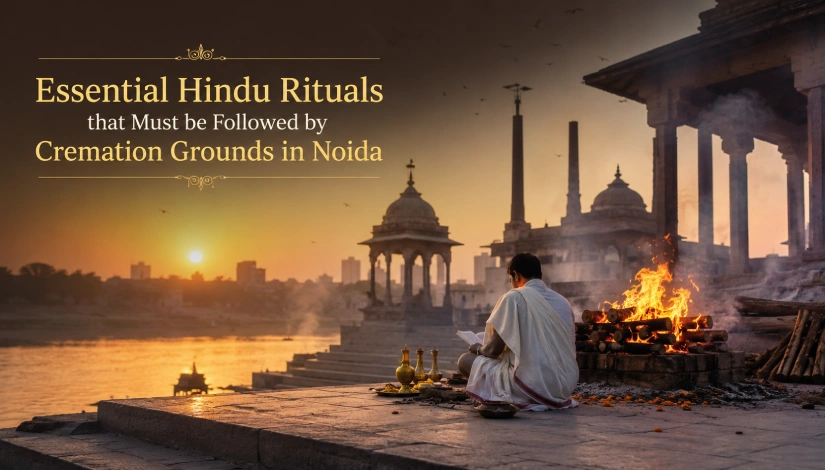
Essential Hindu Rituals that Must be Followed by Cremation Grounds in Noida
In Hindu culture, the last rites and farewell to our loved ones are a sacred process that needs to be done. It needs to be done right with a cremation ground Sector 93 Noida, for a smooth and righteous journey of bidding farewell. Because of the floating memories, the values we learn from them are weighing us down, blurring our days and eyes. This process of bidding farewell is known as the Antim Sanskar, which is considered the pathway to Moksha for attaining peace.
It’s the journey and our responsibility to perform a pooja that can send them in the afterlife. While in villages, the family finds it easy to follow such processes because of the availability of pandits and daah sansakar. But in cities, there is only one support cremation ground Sector 93 Noida, the place that provides all these facilities at one place. This blog explores the Hindu rituals that must be followed and facilitated by an authentic cremation ground.
Core Hindu Cremation Rituals (Antyesti) to Observe
Antyesti, also known as the last rites, is seen as the ultimate and final ritual in Hindu culture. It is believed to help the soul of deceased leaved peacfully from their body and reach the afterlife with ease. It involves a lot of Vedic rituals necessary to conduct without mistake and with love and sympathy so that a fulfilled and happy departure is initiated. To seek out some complete last rites services Noida, one needs to find a place that provides families enough time. In addition to space and facilities to do the five key rituals, which are as follows:
1. The Sacred Bath (Snana) and Dressing
Before the body can be placed for cremation, it has to go through the process of being ritually bathed. Using pure water, often mixed with Gangajal. Following the purifying ritual of bathing, the body is covered in new clothes. This usually involves covering the body in unstitched white clothes for men and widowed women. Married women get covered in red or saffron-colored clothes.
2. Pind Daan (Offering of Rice Balls)
Pinda Daan is the next process and a very crucial step in which the family members offer the Pindas. These are small round balls of rice, black sesame seeds, honey, and ghee. These are placed near the hands, feet, and head of the deceased and are believed to provide spiritual nourishment. These offering also provides energy to the soul as it begins its journey away from the physical realm towards the divine.
3. Parikrama (The Final Communication)
Once the body is laid on the pyre, the chief mourner (usually the eldest son or grandson) performs the Parikrama. Funeral services Noida arranges all these services and proceeds further with the fire consuming the body. There is a vital ritual called Kapal Kriya that starts, in which the priest guides the mourner. To gently taps the skull of the deceased with a long bamboo stick for spiritual significance. It is believed to physically and symbolically break the skull, allowing the soul to escape its bodily confines and move towards Moksha (liberation)
4. Mukhagni and Kapal Kriya
Mukhagni is the very important ritual of setting up the funeral pyre that is done by the primary mourner. As the corpse gets burnt in the fire, an equally important ceremony is performed, which is referred to as Kapal Kriya. The priest will guide the mourner to strike the head of the deceased with the help of a long bamboo stick. The reason why this ceremony is considered to be very spiritual is that this will break the skull and release the soul of the deceased to attain liberation (Moksha).
5. Asthi Sanchayana (Collection of the Remains)
The ceremonies are not concluded after the fire has been put out. Within two days of performing the funeral ceremonies, the family members go back to the cremation ground to collect the Asthi. With the help of a priest, the Asthi is taken in a pot or even wrapped in a red cloth. The remains are carefully kept until they can be released in the holy river (like the River Ganges).
Essential Facilities Required to Support Sacred Rituals
Knowing the rituals is only half of the journey because executing them with each samagri and step is the real deal. It requires a space that facilities all the things needed and handles ancient tradition with modern efficiency. Performing the Anytyesti takes several hours, and only a good cremation ground Sector 93 Noida can execute this. Here is the breakdown of the essential facilities a proper cremation ground must offer:
| Sacred Ritual / Requirement | Necessary Facility at the Ground | Why it Matters for the Family |
|---|---|---|
| Purification & Snana | Clean bathing platforms, fresh water, and privacy screens. | Ensures the final bath is performed with dignity and complete privacy. |
| Vedic Chanting & Pinda Daan | On-site knowledgeable Pandits and complete Puja Samagri. | Prevents last-minute rushing and ensures correct mantra recitation. |
| Mukhagni (Lighting the Pyre) | Dry wood, pure ghee, and weather-proof pyre sheds. | Guarantees a seamless cremation without delays, even in poor weather. |
| Asthi Sanchayana (Ashes) | Secure lockers or designated safe zones for ash preservation. | Keeps the sacred ashes (Asthi) secure until the family returns for collection. |
| Mourner Comfort | Shaded seating, clean washrooms, and safe drinking water. | Provides essential physical comfort to grieving relatives during the hours-long process. |
Wrapping It Up!
Performing the ritual for our loved ones for the last time to guide the journey in the afterlife. In our culture, this is considered to be the ultimate form of respect, and the cremation ground Sector 93 Noida supports it. From finding an experienced pandit to organizing each sacred samagri right at the right place and time is our responsibility. We understand and deeply support that the loss of a family member is the biggest shock, and grief is deeper. So we try our best to help in every possible way to ease the process and make it done smoothly.
At Hindon Cremation, you will find peace and support as our staff is deeply sympathetic and stands with you. You can see them being supportive with us; you will find a trusted partner who is committed to your smooth facility. Our comprehensive facilities cover it all, and our commitment to taking the burden of arrangements off the grieving family’s shoulders helps a lot.
FAQs
Kapal Kriya is considered essential during cremation because it involves gently stopping the skull to release the soul. This sacred Hindu ritual ensures or physically and symbolically releases the departed soul from its earthly body. Helping the deceased achieve the peaceful Moksha state.
Asthi Sanchayan is the ancient traditional process in which the chief mourner collects the remains of the deceased left after cremation. This is typically performed on the third day, on which the remains are respectfully collected to be immersed in holy rivers. It’s the final yet crucial step that completes the Hindu last rites.
Yes, we offer complete end-to-end assistance in the process of you performing the last rituals for your loved ones. Our dedicated team arranges the experienced priests and all the necessary puja samagri, ensuring a hassle-free, deeply respectful farewell. Helping you bid farewell easily and sympathetically during difficult times.
Absolutely. Hindon Cremation provides prompt, respectful dead body transportation services from home to the cremation ground Sector 93 Noida. Our vehicles are fully equipped, ensuring safe and dignified transportation across Noida without any problems and delay.
Yes, our compassionate staff helps guide families through the necessary post-cremation legalities. We provide the required cremation receipts to streamline the municipal process to obtain the death certificate.