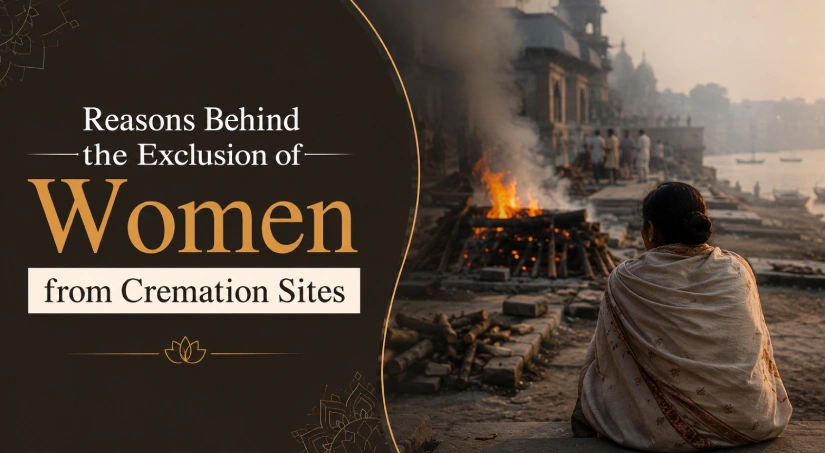
Reasons Behind the Exclusion of Women from Cremation Sites
Cremation is a sacred ritual performed for a deceased person to honor their life, nurture the spiritual transition of the soul, or the return of the body to the elements of nature, and provide a final closure for the grieving. According to Hindu belief, the final funeral rites free a person’s spiritual essence so it may manifest in successive lifetimes. Well! As times evolved and our generation raises questions regarding the authenticity and practicality of the passed-down terms, one of the most discussed and raised topics is the significant reasons behind the females not being allowed at the cremation grounds in Noida.
Furthermore, we live in a country where the identities and duties have been set differently for men and women. In Hindu rituals, women must not attend any proceedings or services that go beyond the street’s boundaries. Additionally, in various scenarios, it is Antim Niwas Sector 94 Noida or any other cremation grounds built near lakes, streams, and bodies so that the holy process of Asthi Visarjan can also be done after the Antim Sanskar. Moreover, in this comprehensive blog guide, we will discuss some fundamental reasons behind the exclusion of women from cremation grounds.
Reasons Why Women Are Forbidden from Attending Cremation Ritual
Check out the potential reasons why women are excluded from attending cremation rituals at the Antim Niwas Sector 94 Noida or any other cremation grounds:
1. Emotional Sensitivity and Trauma
In previous eras, the watching process of the burning of a relative was viewed as a particularly emotional and psychologically demanding activity. In ancient times, cremations happened in wide open spaces, and people had the opportunity to see all stages of the process personally. At times, the high temperature resulted in some bodily movements, which seemed shocking for the witnesses. In connection with this issue, society assumed that the women who were believed to have more pronounced sensitivity should not witness such a terrifying process. Regardless of whether this assumption is correct nowadays, it contributed greatly to the development of this custom.
2. The Ritual of Shaving Head
According to the funeral traditions of Hindus, the chief mourner and certain relatives have to shave off their hair, thereby accepting the fact of their separation from the material world and expressing their respect to the soul of the dead. Moreover, this practice helps avoid the absorption of the negative energy accumulated during death. In ancient India, hair was considered to be an important element of female beauty and identity. Therefore, shaving it in the context of any ritual was socially prohibited. Thus, due to this practice, women did not attend cremation grounds, like Antim Niwas Sector 94 Noida, in order not to break these unwritten regulations.
3. Pragmatic Health and Safety Hazards
It is possible to distinguish several purely practical reasons that led to this practice. Traditionally, cremation grounds in Noida were situated at considerable distances from any populated places. Going there meant taking the risk of encountering various troubles because of the lack of transport means and poor security measures. Besides, it was rather dangerous to handle a dead body because of the possibility of getting infected with different infections. In case the woman went to the cremation ceremony, her whole family was exposed to this threat since she used to take care of her children. This custom was widely spread due to such pragmatic considerations.
4. “Creators of Life”
In accordance with Hindu beliefs, women symbolize life, its nurturing, and creation. On the other hand, cremation grounds in Noida represent the place of death, separation, and the end of physical existence. Considering these two facts, the traditional belief has appeared that women cannot go to the cremation sites, where life ends, because they are supposed to symbolize only the opposite process. In this case, the reasons for such beliefs lie not in any restrictions but in particular symbolism.
5. Preventing Emotional Attachment
In accordance with Hindu culture, the funeral rite has to prepare the soul for the process of reaching Moksha. Thus, the process implies a complete emotional separation from the physical plane. One may assume that in accordance with this principle, excessive emotional behavior can make it very difficult for the soul to go forward. Consequently, the absence of the main symbol of life, women, allows the soul not to face too strong emotions in such a crucial moment.
6. Patriarchal Societal Norms
Today, a lot of people explain this phenomenon using social and historical gender differences. Traditionally, religion and its norms are regulated by men who also interpret and enforce these laws. That is why any public activities are reserved for men, and women are supposed to participate exclusively in housework instead of going to cremation grounds, like Antim Niwas Sector 94 Noida. These social norms became an integral part of religion. Even though some people try to preserve them, others state that these customs are based on nothing more than the patriarchal mentality of that time.
It’s Time to Wrap Things Up!
The above-listed reasons regarding the exclusion of women in the funeral and cremation grounds in Noida are rooted in Hindu beliefs with practically acceptable reasons. Therefore, it is one of the main reasons the followers of Hinduism or Sanatan Dharma will relate to the above reasons. Nevertheless, with time, various changes have been created and accepted in the culture regarding the presence of female family members in cremation and funeral rites. Well, this is always going to be the topic of discussion between the Hindu rituals and women who want to be present in the final moments of their loved ones.
So, if you are searching for the right and trustworthy helping hands in the entire process of taking the deceased body from the hospital or the mourned site to the cremation ground or any other funeral-related assistance, you can connect with us. At Hindon Cremation, we ensure to respect every tiny cremation ritual and ensure that you will spend as much time as possible with your loved ones in grief when we look after everything. Connect with us today!
Frequently Asked Questions
Cremation is considered one of the sacred Hindu funeral rites. It symbolizes the return of the body to the five fundamental elements of nature and helps the soul continue its spiritual journey toward liberation and future rebirth.
Historically, cremation grounds were established near lakes, open spaces, or rivers away from residential areas. Thus, it helped maintain hygiene, provided an open space for funeral rituals, and allowed families to perform Asthi Visarjan after the cremation.
There is no universally accepted Hindu scripture that entirely restricts women from attending cremations. Furthermore, most restrictions are based on regional traditions, family beliefs, and cultural norms rather than a single religious mandate.
Families can contact a professional funeral service provider for documentation, cremation booking, ritual arrangements, transportation, and end-to-end support. Moreover, these services help ensure a respectful and organized farewell while allowing the close ones to be present with the extended families.